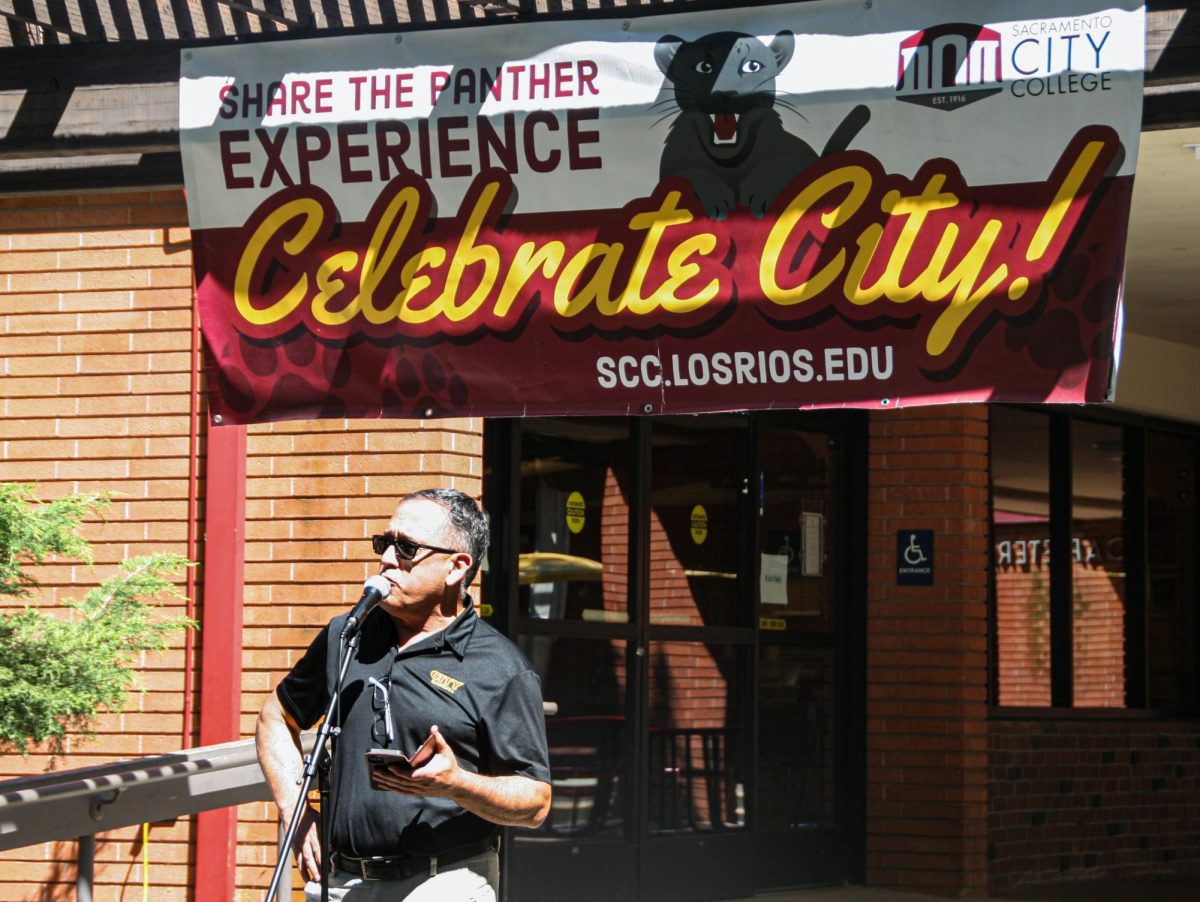


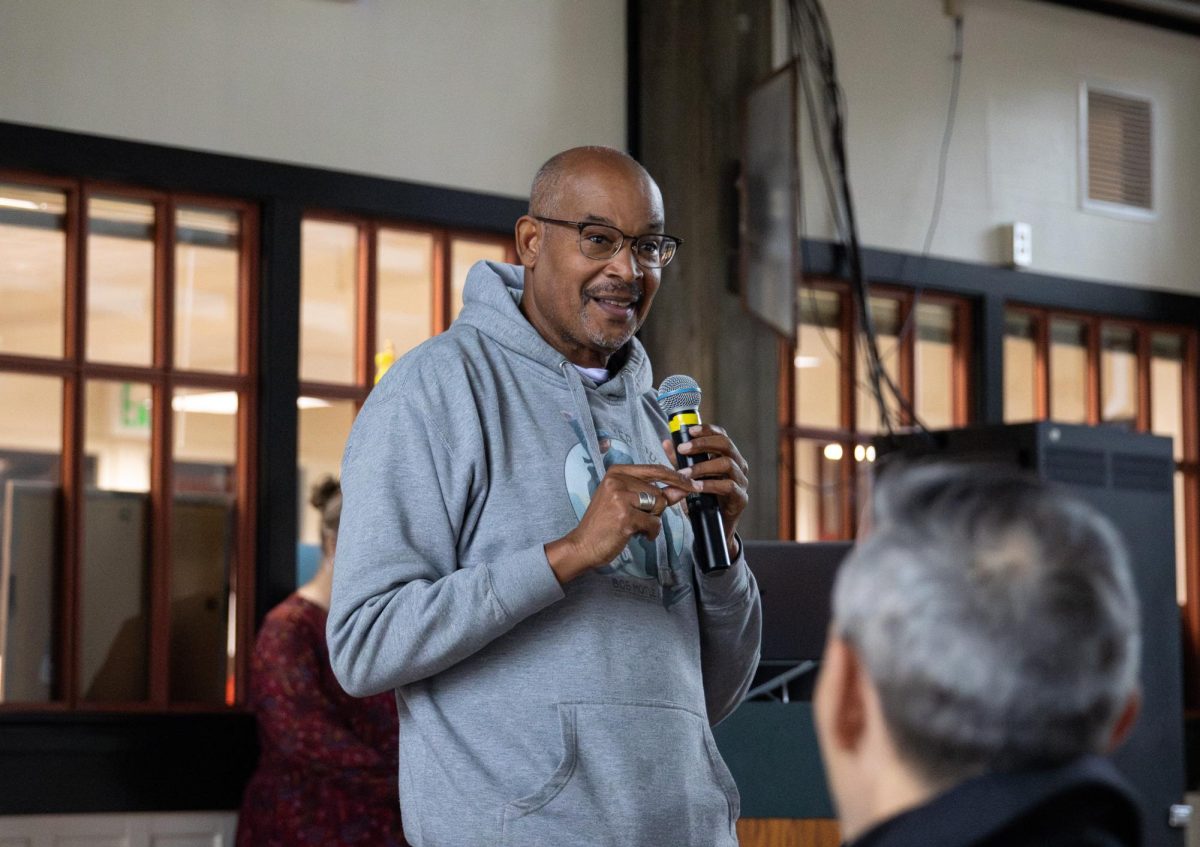



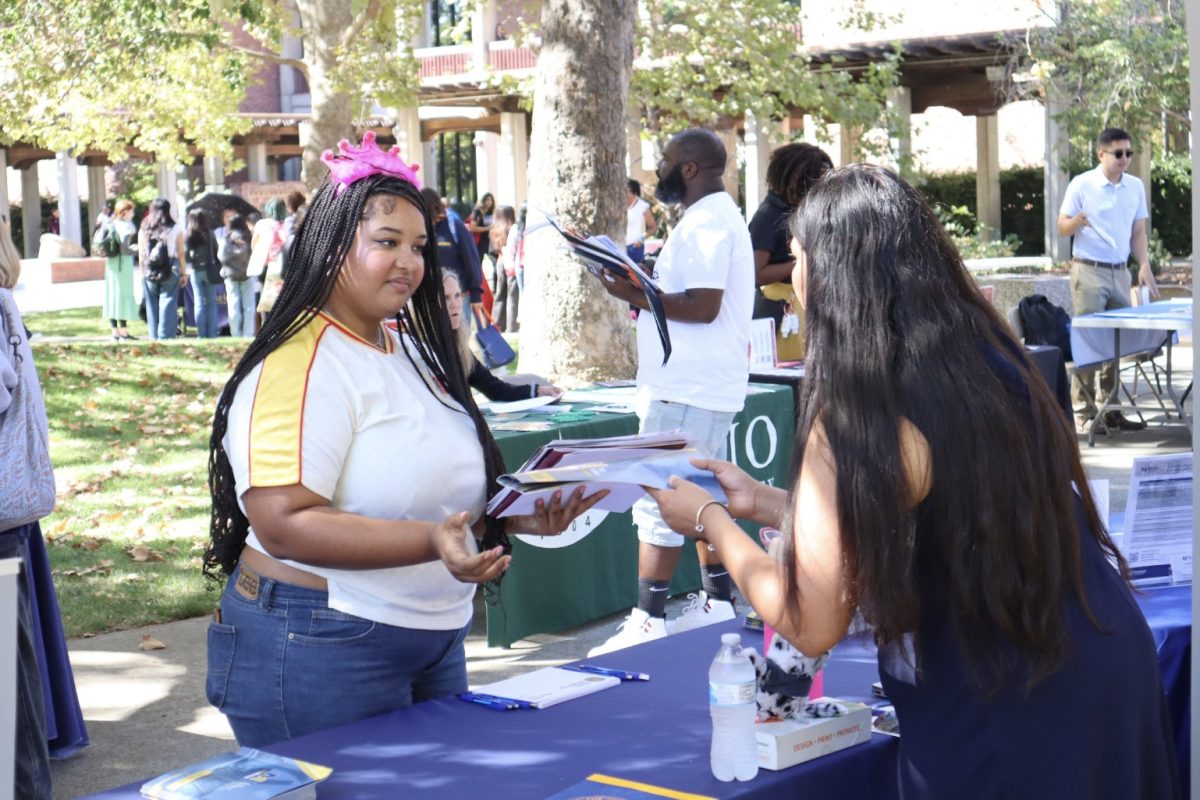

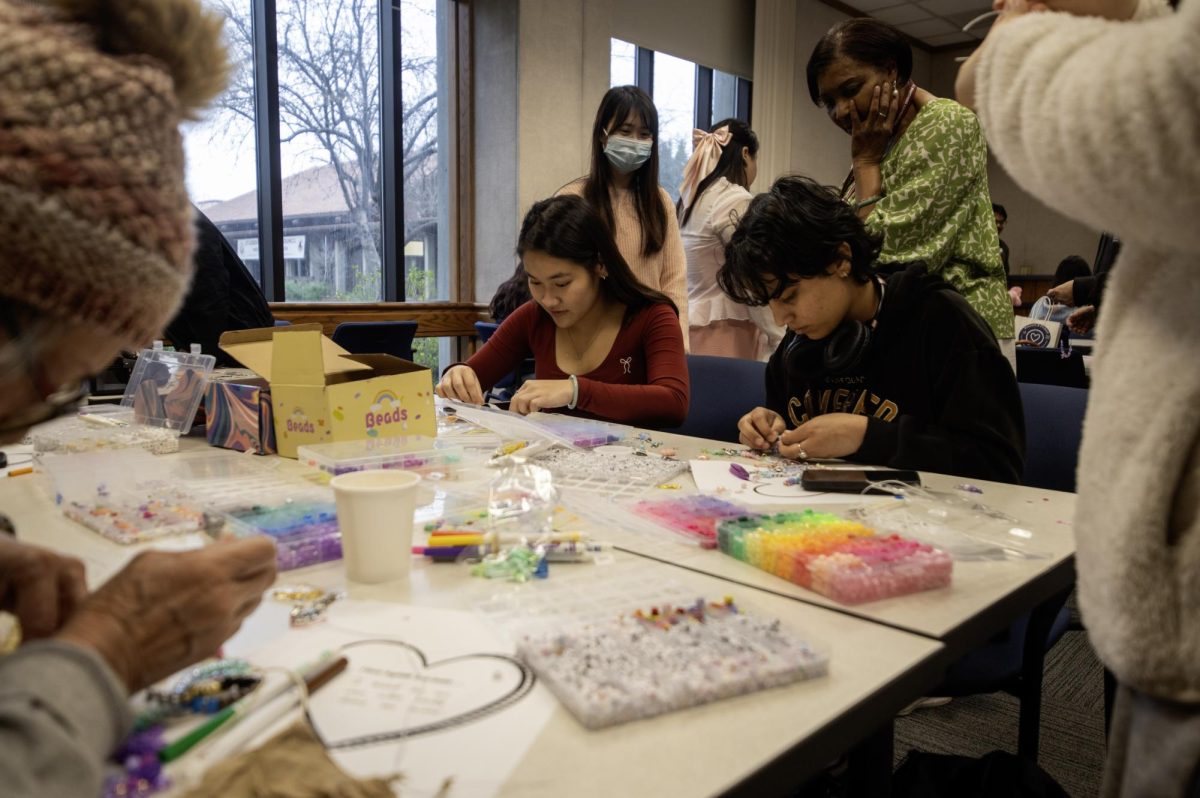

Sacramento City College’s Student Senate hosted documentary film producer Byron Motley at the student center on campus on Feb. 11 for a lecture and showing of the documentary “The League,” is about the history and impact of the Negro baseball leagues in the U.S. from 1920-1962.
The documentary highlights the history of the Negro Leagues and how it also impacted American history, by playing a huge role in the Civil Rights movement. Motley was one of the producers of the film that took more then 23 years to create, with interviews from baseball legends like Willie Mays and Hank Aaron, and stories from legends of the Negro Leagues, including Buck O’Neil, Satchel Paige and his father Bob Motely. The elder Motely was a former Marine and a famous umpire in the Negro Leagues and was a part of inspiring his son’s film.
Rube Foster, an executive and former pitcher, founded the Negro National League in 1920, to provide a league for African Americans to play as they were excluded from Major League Baseball. There were independent Black teams but Foster convinced other owners to come together and create a competitive league, so the teams could be more independent financially and more stable. Here are 10 facts I learned during the lecture and from the film.
- Moses Fleetwood Walker was the first professional Black baseball player.
While Jackie Robinson did break the modern day baseball color barrier in 1947, Walker was a catcher for the Toledo Blue Stockings, originally a minor league team, but was a part of the American Association and considered a Major League team in 1884. Walker played 42 games before being released. This proves that there were always great Black baseball players who played the game.
- Baseball was not fully segregated before 1887.
Black players actually did play with white players. While it was rare, there were teams that had one or two players of color. It was more accepted because they did not make the majority of the teams. On July 14, 1887, Cap Hanson was a part of the Chicago White Stockings and was playing against the New Little Giants from the International League. The Giants had two Black players, Walker and pitcher George Stovey. Anson refused to play if they were playing. The team obliged and it started a movement of segregation in baseball. Anson was a very popular player at the time and most followed in his footsteps. The directors and owners of the National League went on to meet and later banned contracts of all colored people.
- Black churches stopped services early for the games.
The Negro Leagues were so important to the communities that churches would end the service early for the games. If they did not stop the service early, most would leave anyway! It shows just how popular the leagues were during its time.
- Josh Gibson is the forgotten baseball power legend.
Josh Gibson was a famous player who played 17 seasons. His hitting is compared to the all-time greats like Barry Bonds and Hank Aaron. After Major League Baseball incorporated Negro League statistics as official MLB records, he has the highest career batting average at .371. It is rumored that he has hit over 800 homeruns, which would be an MLB record and past Bonds at 762 homeruns, but the Negro Leagues statistics and records were not always recorded or well kept so the official total is unknown. Josh Gibson was one of the greatest hitters of all-time but never got his chance in the MLB after being diagnosed with a brain tumor in 1943. He refused surgery and continued to play until he died of a stroke in January 1947, at the young age of 35.
- Around 120 Negro League Players were in World War II
Famous players like Jackie Robinson, Larry Doby, Buck O’Neil and Monte Irvin served during the second World War. The leagues kept playing, even without some of their best players. They were fighting for our country even though they did not have equal rights back at home. They were also a part of the Double V Campaign, an activist movement that supported equality for African Americans and the hypocrisy of fighting while not having freedom at home.
- MLB first commissioner delayed breaking up segregation in baseball
Kenesaw Mountain Landis was MLB’s first commissioner from 1920-1944. He was assigned after the 1919 Black Sox scandal where eight players were banned for life after throwing the games and losing on purpose, working with gamblers for extra money. The scandal was a very dark time for baseball and Landis was given special permissions and power to “clean it up.” Landis was a part of keeping the “gentlemen’s agreement” of keeping colored people outside of baseball. He banned what was called “Barnstorming,” which was exhibition games where interracial teams would travel many places and play. After the Negro Leagues seasons, they often barnstormed. Landis did everything in his power to exclude colored people in baseball and no progress was made until after he died in 1944.
- Black players did not make up the whole Negro Leagues
It is often thought that the Negro Leagues were just for Black people, but that is actually untrue. The league included Latin players and even sometimes white players. Latin players were a big part of the leagues and some famous players include José Méndez and Martín Dihigo who were both Cuban. Players from the leagues would often “barnstorm” during the offseasons and play in Latin countries. A lot of players enjoyed playing in Latin countries because they sometimes earned higher pay and the games often had larger crowds and fiery Latin energy.
- Women could play ball too
Effa Manley is the first and only woman so far inducted into the National Baseball Hall of Fame in 2006. She was a pioneer for the leagues and a big activist. She co-owned the Newark Eagles with her husband, Abe Manley, from 1935-48. She was a large voice for the leagues and also fought for civil rights. Three women played in the leagues. Toni Stone, Mamie “Peanut” Johnson and Connie Morgan. They all played for the “Indianapolis Clowns” a team that mixed entertainment with baseball. They were known as Baseball’s Harlem Globetrotters, which is an entertainment basketball team. While the clowns were a real team, it was mostly for entertainment of fans, but Stone was the first woman to play in a professional men’s baseball game after playing for the Kansas City Monarchs in 1954.
- They played almost everyday and sometimes even four games in one day!
While the official leagues schedule ranged from 40-80 games a season, different from MLB’s constant 162-game schedule every season, with how often they barnstormed they could have played around 200 games a year. In this film a story is told of a team playing four games in one day! There are also stories of how hard the travel was, while dealing with racism, forced away from nicer hotels and long travel days. Sometimes they would have to sleep at the ballpark. They dealt with the hard times with music, cards and building strong bonds.
- Integration changed the landscape of baseball forever.
While Jackie Robinson breaking the color barrier in baseball was huge for baseball and America as a whole, it was the start of the decline of the Negro Leagues. Players started to follow and so did the fans. With the most popular players leaving, the attendance declined quickly and the teams were not always compensated for their players and contracts. Ricky Branch, who signed Robinson to the Dodgers organization, never actually paid the Kansas City Monarchs for his contract. The Negro National League ended in 1948 and the Negro American League ended after the 1962 season. The Indianapolis Clowns and some exhibition teams still existed but it was never the same.
My biggest takeaway from his lecture and movie showing was, not only is the Negro Leagues an important part of baseball history, but American History. It was a major part of the Civil Rights movement and it was even a movement before the actual civil rights movement fully started. The leagues were not the best at record keeping and as time passes, fewer players and people who were a part of the leagues are alive, so it is important to educate and talk about this rich history, to keep these legendary stories alive.
Aliya Muslun, a pre-allied health major at City College who attended the event said “I think my favorite thing that I learned was being more informed about Jackie Robinson. I knew that he was quite a popular baseball player, but I didn’t know why. I thought it was his stats and things like that, which I know he’s good. But then also the fact that he was the first Black man to play in the major leagues was pretty insane. So I’m really interested in learning further about his life and his upbringing and how he played within the MLB.”