
























North Carolina’s own J. Cole has put together one of the most respected runs in this generation of hip-hop. He has consistently placed himself in the top-three conversation, delivering meaningful and story-driven projects like “4 Your Eyez Only,” still my personal favorite, along with “Born Sinner,” “KOD” and the early mixtapes that finally made their way to streaming platforms in late 2024.
His catalog reflects growth, maturity and a level of vulnerability that separates him from many of his peers.
As with every great run, however, there comes a closing chapter. For Cole, that chapter is “The Fall-Off,” which is his final studio album.
The funny thing about this is that the buildup to “The Fall-Off” did not happen overnight. The album was already teased back in 2018 when “KOD” closed with “1985 (Intro to ‘The Fall-Off’),” directly teasing what would eventually become his final act. In 2020, Cole even shared a visual roadmap outlining his remaining steps, crossing off features to show he had given his all on guest verses, as well as the release of “Revenge of the Dreamers III,” the group album under the Dreamville label.
Then came “The Off-Season” in May 2021, which felt like preparation, almost like an athlete training before the championship. But in 2024, the conversation shifted.
In April 2024, Cole released the mixtape “Might Delete Later,” and fans were immediately confused. Many believed the long-anticipated “It’s a Boy” based on the map had either been renamed or scrapped entirely. The uncertainty only added to the speculation surrounding his final run.
At the same time, hip-hop was in the middle of the nonstop rap feud between Compton’s Kendrick Lamar and Toronto’s Drake, arguably the biggest rap battle of this generation. Cole became part of the discussion after Kendrick’s verse on “Like That,” widely interpreted as a response to Drake’s “First Person Shooter” from “For All the Dogs,” which featured Cole.
“Might Delete Later” included “7 Minute Drill,” a Kendrick Lamar diss that immediately drew attention. However, shortly after its release, Cole made the decision to remove the track from all streaming platforms. During Dreamville Festival, he openly admitted that the diss did not sit right with him and felt disrespectful. Considering his history of collaboration and mutual respect with Kendrick, not including the years fans wished for a joint album between the two, which never happened, Cole chose not to let one record permanently damage that relationship. Instead, he distanced himself from what became the most intense rap beef of the decade.
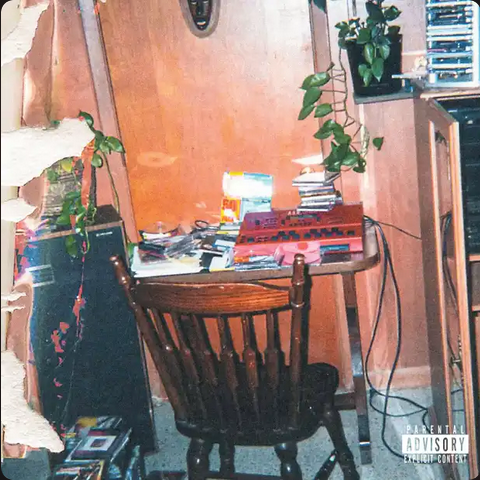
After years of buildup, “The Fall-Off” finally arrived. I listened to the album in full on release, and I genuinely enjoyed it. It is cohesive, reflective and true to who Cole has always been as an artist. Not only that, but the project is a double album, having two perspectives from the ages of 29 and 39 years old, seeing the evolution of one of the greatest lyricists of the modern day. I liked that the features were hidden and the expectations of fans confirming that Kendrick and Drake would make an appearance were false, as he brought Future for multiple tracks, alongside Tems, Erykayh Badu and Morray as some of the others.
At the same time, I understand the conversations from fans happening online. When an artist announces a final album, expectations automatically rise. Fans expect something career-defining, constructing an undeniable classic that closes the chapter with authority.
No disrespect to the project at all, but personally, I hoped it would end with a little more intensity — something that felt like a definitive, explosive send-off to match the legacy he has built.
Adding another layer to the narrative, just days after “The Fall-Off” was released, Cole confirmed that “It’s a Boy” is still coming. He clarified that it was never replaced by “Might Delete Later” and will arrive when the timing feels right. That announcement leaves fans in an interesting space — what was once believed to be the final album may not be the absolute end after all.
Regardless of how the final chapter unfolds, J. Cole’s consistency, storytelling ability and impact on this generation are already cemented. Whether he goes out quietly or with another statement piece, the legacy of J.Cole is secure.